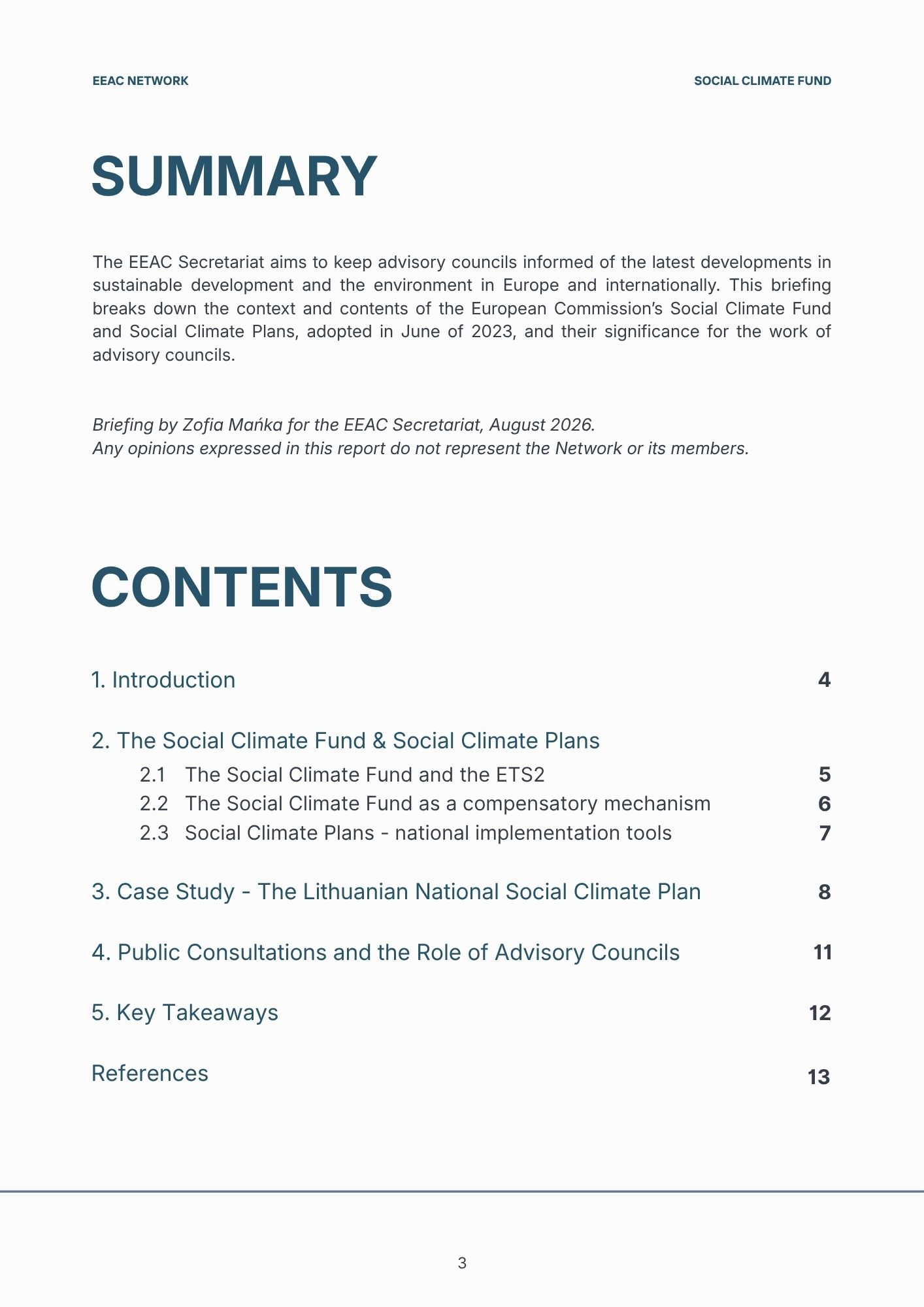
The briefing introduces the EU’s Social Climate Fund and Social Climate Plans, examining how they can help ensure that the green transition does not disproportionately affect vulnerable households, transport users and micro-enterprises. The briefing also explains how the two Funds link to the new ETS2 carbon-pricing system, which may raise household energy and transport costs, and how national plans can provide short-term support while investing in long-terms solutions such as home renovation and affordable cleaner transport. It presents Lithuania’s integrated and participatory plan as a promising good-practice example, while also considering the narrower scope of Sweden’s plan and consultation shortcomings in Latvia. The central takeaway is that effective Social Climate Plans must address the structural causes of vulnerability and enable stakeholders to meaningfully influence both their design and implementation.